Evidence & Policy
Insights
Pending final review
This work is currently pending final review by our team. This page was last updated on September 14, 2026 at 12:30 PM. This banner will be removed once this page is published.
Introduction
Text TBD.
Housing Alone Is Not Enough; It Takes People to Make It Work
Every community in this report, including Toledo, Dayton, Akron, Balance of State, and Canton, independently identified the same need in planning conversations: better-trained staff and stronger coordination across the systems that young people interact with, such as schools, child welfare, juvenile justice, and homelessness services.
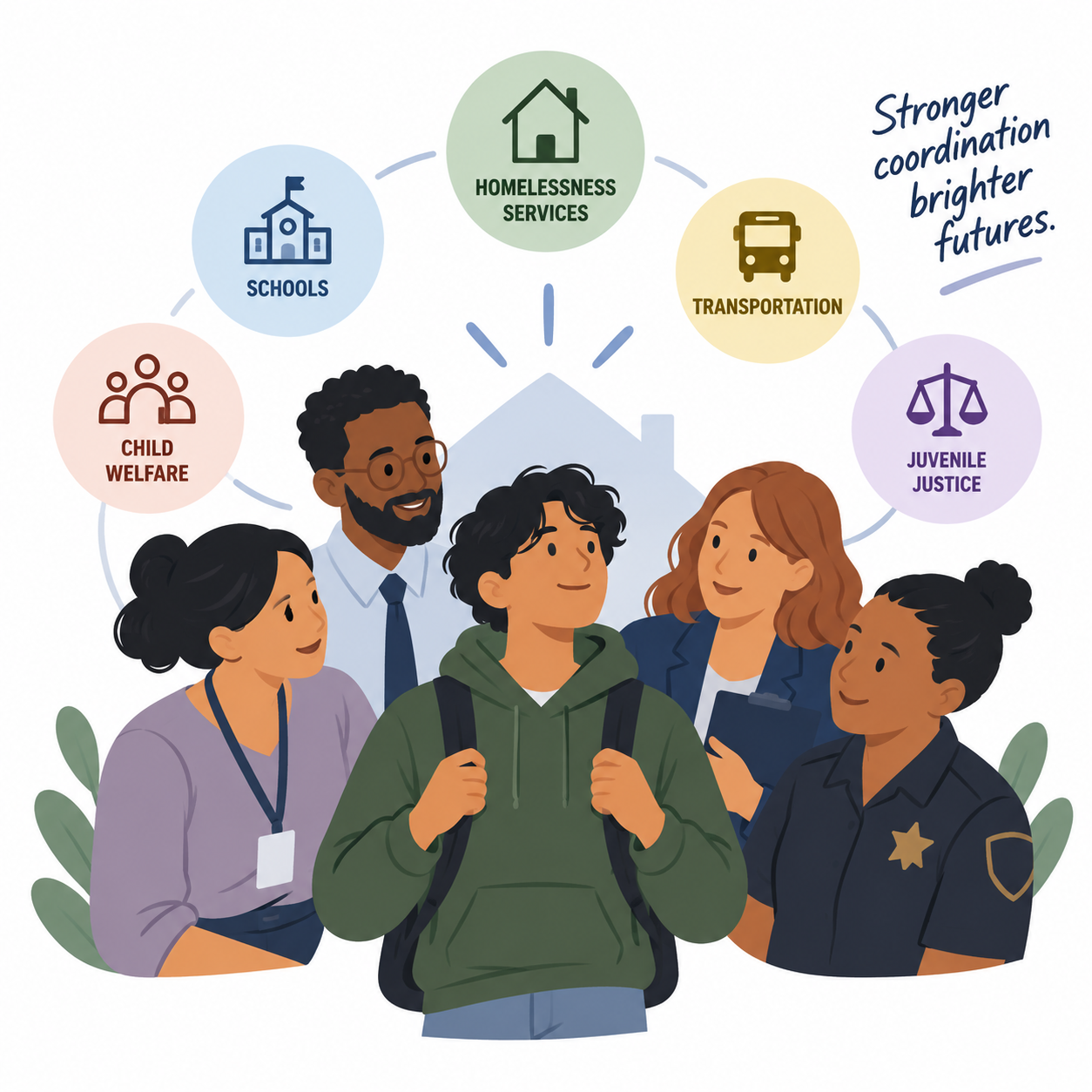
Fund training for staff in schools, courts, and shelters to recognize the signs of youth homelessness.
Young people are identified and referred to help earlier, instead of falling through the cracks between systems.
Fund the everyday supports that keep someone housed, like transportation to work and landlord mediation, alongside the housing itself.
Housing placements last longer, because young people get the ongoing support that keeps them stably housed.
Fund additional staff training and salaries so cross-system coordination is a funded job, not an afterthought.
Providers spend less time dealing with gaps between systems and more time directly helping young people.
What Works in a City May Not Work in Rural Areas, So Funding Needs to Be Flexible
Balance of State covers 79 of Ohio's 88 counties, most of which are rural or suburban. An approach that relies on city resources, like concentrated shelters, providers, and transit, does not work in a county where the nearest provider is an hour away.
Federal homelessness funding has rules about what it can pay for. Some things that communities actually need, such as transportation, short-term flexible assistance, or staff time, are not covered by these rules.
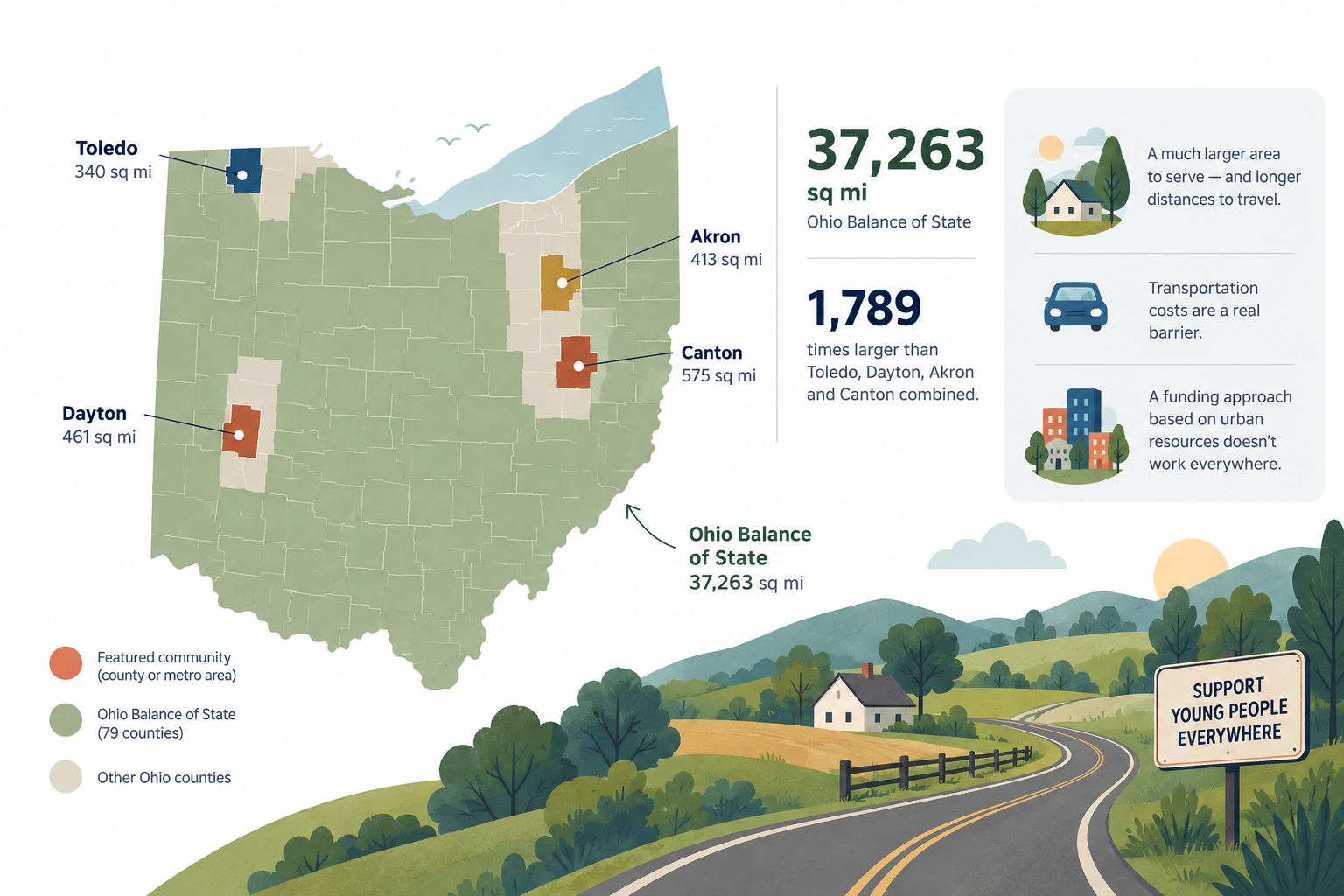
Create a flexible funding pool that covers local needs like gas money, staff time, and short-term assistance.
Communities spend on what they actually need locally, instead of following a one-size-fits-all design.
Design that funding pool around rural and suburban circumstances, not urban assumptions.
Rural and suburban communities finally get a funding option built for their circumstances.
Administer that pool at the state level, outside federal funding cycles.
The state can respond to specific local needs more quickly than federal funding cycles allow.
Young People Need Help Before They Become Homeless, Not Just After
Communities involved in this project's planning sessions said that prevention and diversion, which help keep young people from losing housing in the first place, are a priority.
Prevention program capacity varies widely by community, from none in Dayton to 73 programs in Balance of State. But across all six systems combined, only 3 of 96 total homelessness prevention projects statewide serve youth exclusively rather than youth alongside the general population — all 3 in Balance of State.
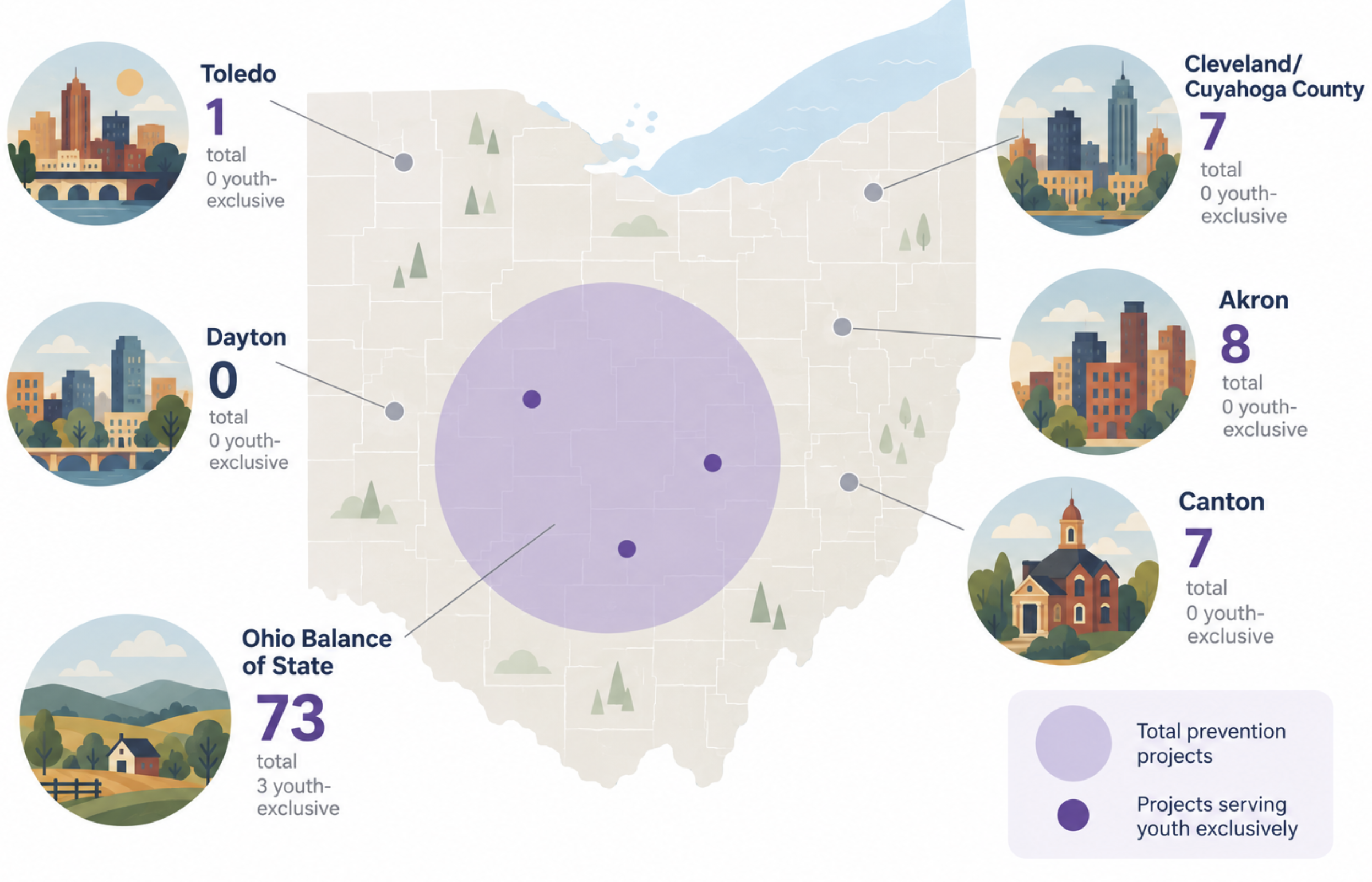
This section is still being finalized and may change as data confirmation continues.
Fund youth-specific prevention services, like landlord/family mediation and short-term financial assistance.
A young person at risk of losing housing gets help before ever needing a shelter bed.
Direct that funding toward diversion, not just emergency shelter capacity.
Fewer young people enter the formal system, freeing up crisis resources for those with no other option.
Fund staff and programs that can act on early warning signs, like a pending eviction.
Communities intervene before someone is already homeless, not after.
Rapid Re-Housing Helps People Get Into Housing Quickly, but Staying Housed Is a Separate Challenge
Rapid re-housing helps people move into permanent housing quickly, with short-term financial help and case management. How long someone stays in the program, and whether they remain stably housed, depends on the community and the people being served.
Where a rapid re-housing exit-to-permanent-housing rate has been reported, it ranges from 76% in Balance of State to 94% in Dayton — a wide enough gap that "rapid re-housing" clearly isn't one uniform program across the state. Toledo's 100% reflects a small sample of 6 parenting-youth households. Canton and Cleveland have not yet reported a comparable rate.
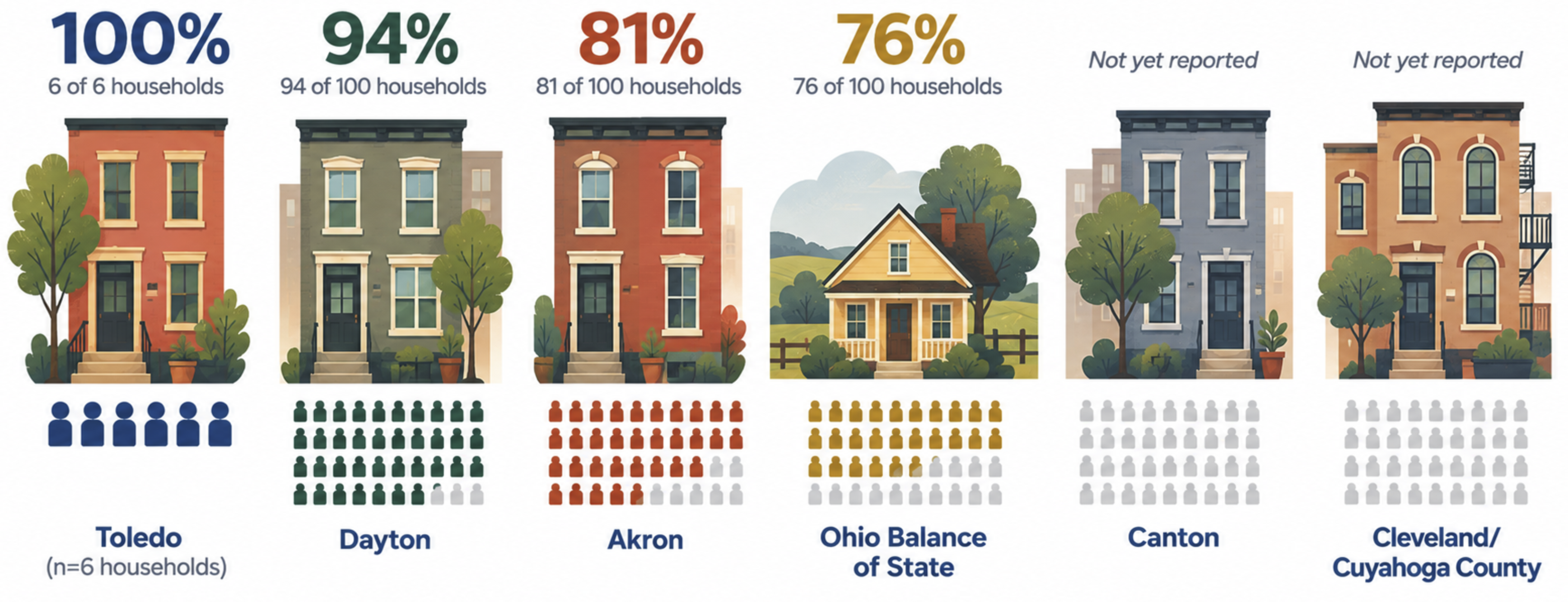
This section is still being finalized and may change as data confirmation continues.
Fund a study of what actually drives lasting stability, like length of support and paired services.
Communities learn which specific practices work, instead of assuming every program works the same way.
Use that evidence to adjust program design, not just keep programs running as-is.
Programs are adjusted based on evidence, not just because they move people out of shelter quickly.
Direct funding toward the versions of rapid re-housing shown to work.
Funding goes to what's actually effective, not just what's already in place.
Housing Built for Youth Is Scarce, Even Where General Housing Is Plentiful
Most permanent housing programs in Ohio are not designed just for young people. For example, permanent supportive housing, which is long-term housing with services for people with disabilities, is rarely set aside for youth-only households.
Cleveland/Cuyahoga County has over 11,000 shelter and housing beds, making it one of the largest systems in the state, but the same gap exists there too. Having a large system does not guarantee that young people have housing designed for their needs. Eligibility rules, program design, and the support offered all affect whether a young person can actually use a bed that is available.
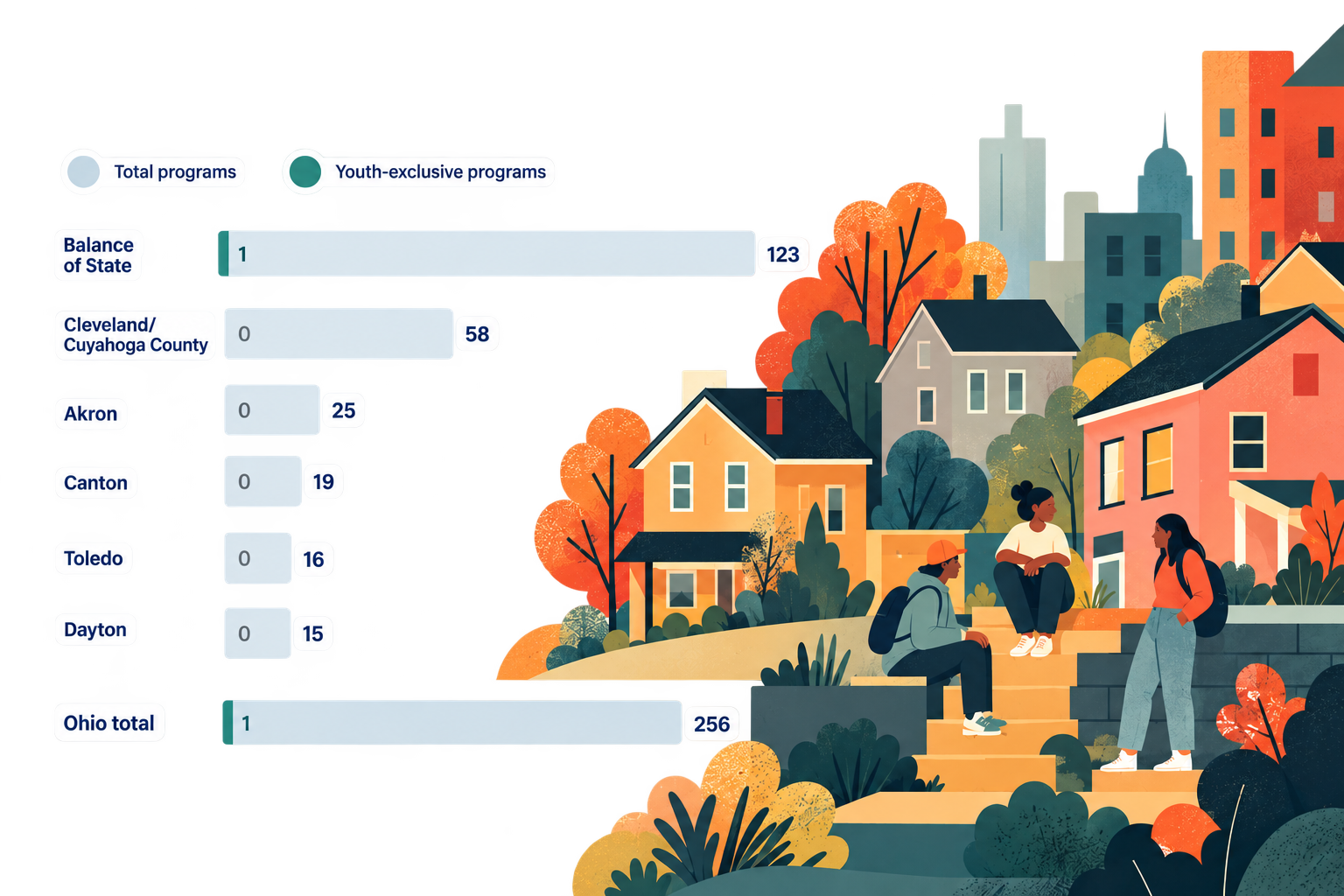
Fund eligibility criteria and program design built around young people, not adult circumstances like credit or work history.
Young people are no longer screened out of programs built around adult circumstances.
Make youth-dedicated housing funding available to communities of every size, not just the largest systems.
Any community can create youth-specific housing, since the gap isn't tied to system size.
Fund enough youth-dedicated placements that a good fit is no longer optional.
Fewer young people have to choose between an unsuitable placement and no placement at all.
Keep reading this report: